What is Privileged Access Management (PAM)?
Every enterprise environment has some privileged accounts; these are the accounts that have higher elevated access than standard users. Due to their high level of access, these accounts are a prime target for cyber attackers.
Privileged Access Management (PAM) is a cybersecurity strategy and tool that secures privileged accounts from credential theft, identity-based attacks, and privilege misuse by enforcing least privilege. A PAM solution helps reduce cyber insider threats and also helps comply with security requirements of different industries.

What is the Purpose of Privileged Access Management
The primary purpose of Privileged Access Management (PAM) is to safeguard an organization’s IT environment by identifying, securing, and monitoring all high-level access to critical systems, applications, and data. PAM ensures that only authorized users and processes can access sensitive resources, reducing the risk of breaches caused by credential misuse, insider threats, or cyberattacks. It enforces least privilege, eliminates hard-coded or shared credentials, and provides full visibility into privileged activities.
Beyond security, PAM also supports compliance readiness by generating detailed audit trails, enforcing access policies, and aligning with standards like PCI-DSS, SOX, HIPAA, and ISO 27001 helping organizations meet regulatory requirements with confidence.
What are privileged accounts and their types?
Privileged accounts are the accounts that have a higher level of access in a system than regular users. Privileged user accounts can belong to individuals like employees, as well as machines and applications. Below are some important types of privileged accounts:
1) Domain Administrator Accounts
Also known as superuser accounts, these are the accounts that have the highest level of privilege in an IT environment. These accounts have the rights to control users, systems, policies, and security across the entire domain. Their unrestricted access across a wide range of assets makes them highly valuable targets for cyber threats.
2) Local Administrator Accounts
These accounts have access to and control over individual endpoints and servers. Some of the privileges these accounts have include executing different commands, making system changes, creating and modifying files, or changing settings. Additionally, they can grant or revoke permissions for any users under them.
3) Service Accounts
Service accounts are used by applications and background services to interact with operating systems, databases, and other enterprise systems. Because they often require broad, persistent permissions to function, they can become high-value targets if not secured properly. Their passwords are rarely rotated and are sometimes embedded in scripts or configuration files, making proactive management essential.
4) Root Accounts
In Linux, Unix, and macOS environments, root accounts provide full, unrestricted control over the operating system, allowing administrators to modify configurations, access all files, and manage users. Due to the immense power they hold, root access should be used sparingly and often replaced with controlled sudo privileges to reduce risk and improve auditability.
5) Cloud Privileged Accounts
Cloud privileged accounts, such as AWS root users, Azure subscription owners, and GCP organization admins, have authority over cloud resources, identity management, networking, and security policies. These accounts can create or delete infrastructure, modify access controls, and manage sensitive data, making them some of the most critical accounts to protect with strong authentication, strict access controls, and continuous monitoring.
Features of privileged Access Management
PAM offers many advanced features to strengthen your cybersecurity and avoid privileged misuse. Some of the top and widely appreciated PAM features include:
1) Granular Access Controls & Least Privilege
Granular access control provides role-based access (RBAC) to users as per their work requirements, giving specific permissions to users or groups and allowing them access only to the resources or data they need and nothing more. Rather than giving complete access to every user, it enforces the least privilege principle, ensuring users and applications get only the minimum access required. This strengthens security and clearly defines roles within an organization or system.
2) Just-in-Time & Just-Enough Access Management
As the name suggests, this PAM feature allows users/applications to get time-bound and minimum required access to privileged resources only when needed. Access is automatically de-provisioned after the session ends. This removes standing privileges from the system, strengthening cybersecurity and reducing insider threats and lateral movements.
3) Credential Vaulting, Password Rotation & Lifecycle Management
PAM automatically discovers and stores all privileged credentials in an encrypted central vault using strong encryption (AES-128, AES-192, AES-256). It replaces old hard-coded or shared credentials with secure, rotated secrets.
The system automatically rotates passwords, SSH keys, API keys, and service account credentials. Admins can set different password policies such as password complexity and expiry. This eliminates credential reuse and prevents credential-based attacks.
4) Session Monitoring & Recording
PAM records every session for all users and monitors privileged activity in real time. It provides full session playback in video format. Policies can be applied to detect suspicious commands or behavior instantly and terminate the session if any suspicious activity occurs.
5) Audit Logs & Compliance Reporting
Many PAM solutions support standards like PCI-DSS, HIPAA, GDPR, SOX, ISO 27001, etc. They generate detailed, immutable access logs and compliance-ready reports, helping organizations comply with security requirements.
How does PAM work to secure your IT Environment?
Below is a step by step working process of privileged access management in almost every environment.
- Privileged Account Discovery and Onboarding:
Whenever you implement any PAM server in your environment, its journey starts by scanning all accounts in your organization to find privileged accounts. Scanning may include accounts like AD, servers, cloud, databases, network devices, and applications. It classifies all privileged accounts such as domain admins, local admins, service accounts, SSH keys, API keys, etc., and labels them as per their sensitivity.
These accounts are then onboarded to be secured within the PAM vault. It also replaces embedded, human-used, or script-used credentials with Advanced Encryption Standard (AES) keys- AES-128, AES-192, and AES-256. This provides advanced security for credentials in case of any data breach.
- Granular Access Policies & Least Privilege
This process involves applying granular access policies to all onboarded accounts as per their requirements. These policies are used to monitor who can access what, when, and how. With least privilege and just-enough-access principles, only the required amount of access is provided to each individual and application. By setting Just-In-Time (JIT) elevation rules, PAM grants temporary privileges, approval chains, and time-limited access.
- Access Request & Approval
In this step, using the PAM portal, a regular user or service/application requests access to a privileged account for a particular activity. The user can write a note and set a timer for the required duration of access.
The request triggers automated checks based on set policies; if the user is allowed, the request gets approved. If admin approval is needed, the admin can review and approve the request from their account. The admin can also limit or increase the access level and its time duration.
- Multi-Factor Authentication (MFA) & Strong Controls
PAM enforces MFA (Multi-Factor Authentication), a security approach to verify that the authorized user is logging into the system. MFA checks based on the user’s IP, location, device posture, time, and risk scoring allow or block user access.
Apart from this, the session is time-limited using the Just-In-Time Provisioning feature. The user gets logged into the system via a remote RDP device without needing to type a password, and within this RDP session, only the required resources are visible
- Session Monitoring & Recording
The PAM solution records every activity of the user through its recording features. It records keystrokes, commands, terminal output, clipboard usage, and/or video for GUI sessions, which are useful for security and compliance purposes.
Administrators can also monitor activities in real time and have the ability to terminate sessions instantly. Different types of policies can be set to automatically identify suspicious activities and terminate the session.
- Governance, Auditing & Compliance
A PAM tool maintains immutable audit trails, session recordings, and policy change logs. It also produces compliance reports (PCI, HIPAA, SOX, ISO) showing least-privilege enforcement, access approvals, and credential rotations. These resources are useful for achieving compliance with security standards across different industries.
Choosing the Best PAM Solution:
PAM is a long-term investment, and while choosing the best PAM solution for your organization, there are some things you should always consider.
Flexibility in Deployment (Cloud, On-Prem, Hybrid):
Choose a PAM solution that fits your infrastructure. Modern enterprises need flexibility to deploy on-premises, in the cloud, or in hybrid environments without complex setup.
Ease of Implementation:
A good PAM solution should be flexible enough to easily deploy with your existing infrastructure. It should be lightweight and require minimal agents or configuration. Ask the vendor about the complexities and required time to go live with their PAM in your organization.
Integration with Identity, SIEM, and SOC Tools:
PAM should seamlessly integrate with AD, Azure AD, ITSM tools, SIEM platforms, cloud providers, and security operations solutions to ensure centralized security visibility.
Multi-Factor Authentication:
Ensure the PAM supports MFA across all access points, like VPN, SSH, RDP, web consoles, cloud accounts and includes contextual policies like device posture, IP, time, and geolocation.
Compliance and Reporting Capabilities:
There are many organizations that plan to buy PAM to stay ahead of security compliance. Make sure to select a PAM tool that provides detailed audit logs and compliance-ready reports for different frameworks.
Scalability and Performance:
Ensure the PAM solution can scale easily with your users, servers, cloud workloads, and applications without performance issues.
Cost-Effectiveness and Licensing Model:
Evaluate pricing transparency, licensing flexibility, and whether the solution provides high value, especially for growing teams or multi-cloud environments. The pricing should be justifiable with the features they are offering.
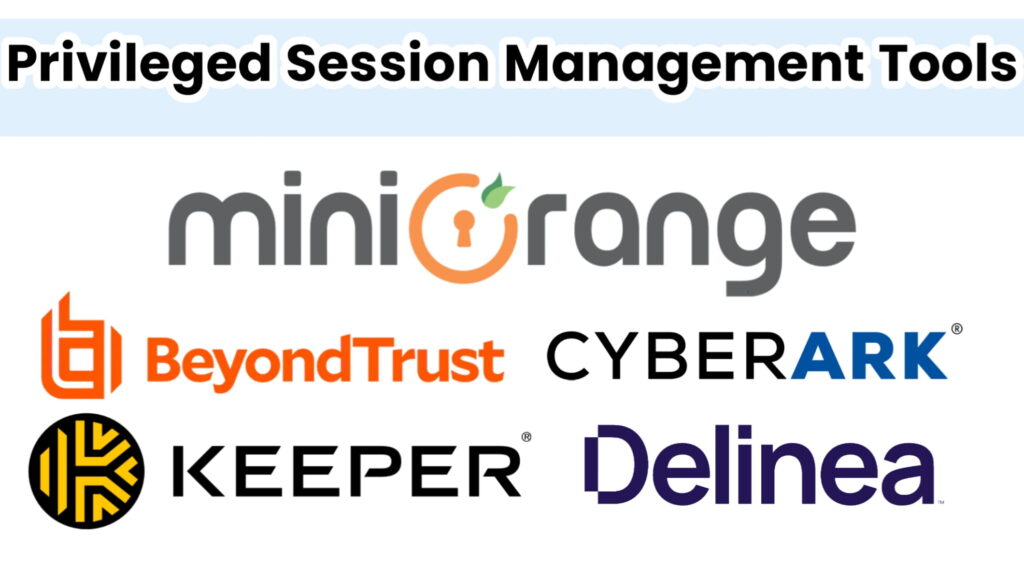
Still confuse checkout our Comprehensive list of Top 5 PAM Vendors.
Conclusion:
PAM is no longer optional, it is a cornerstone of a modern cybersecurity posture. It secures your IT environment, protects your organization from data breaches, ransomware, and insider threats, and strengthens overall security by helping you comply with industry standards and regulatory requirements.

Omkar Deo is a cybersecurity and SaaS professional with over six years of hands-on experience in the field. He works closely with modern security solutions and scalable software products, focusing on real-world implementation and business impact. Passionate about emerging technologies, Omkar constantly explores new tools, trends, and architectures to stay ahead in the fast-evolving tech landscape.